As the lights were switched off and the halls became empty again, it was clear that Digifest 26 was another successful event. Full of inspiration, conversation, and a touch of provocation.
Whether in breakout sessions or in the bustling Hall 3, everywhere I looked I could see people chatting to colleagues, friends and new acquaintances, deep in conversation and probably engaged in some form of storytelling. It’s a characteristic of these types of events (especially at Digifest) to tell others what’s happening back on campus. We’ve all shared those successes or challenges that others can relate to, inspiring a reaction and probably even more discussion.
This year, Chris Thomson and I wanted to continue our annual storytelling workshops at Digifest. As part of the Digital Storytelling community (managed with Richard Beggs at Ulster University and Dr Teti Dragas at Durham University), we wanted to provoke discussion around storytelling and employability. There’s so many ways in which learning can be impacted on by different tools and techniques, we wanted to delve into how storytelling is being used with colleagues and students in HE, FE and how we think it could be used beyond learning and in the workplace.
This blog post is a round up of the discussion from the workshop which I hope captures some of the energy and positivity that I certainly felt.
The employability angle is an interesting take on storytelling. From applications to interviews, or emails to presentations and meetings, storytelling skills can have a huge impact on how we connect and work with other people. This was the basis of the workshop: to ask attendees to share their thoughts on how storytelling might influence employability.
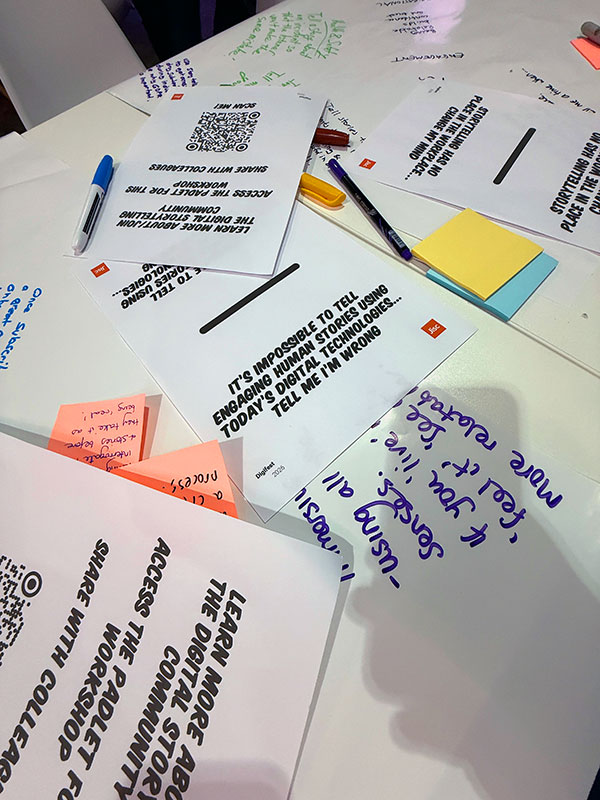
We decided on two challenges. We wanted to provoke responses that argued the case for storytelling in relation to employability, both for students now and also as they move into the workplace… And to have some fun at the same time.
Storytelling has no place in the workplace… change my mind.
It’s impossible to tell engaging human stories using today’s digital technologies… tell me I’m wrong.
The intention of the session was to encourage discussion in small table groups. The conversations were captured as notes on flipchart paper.
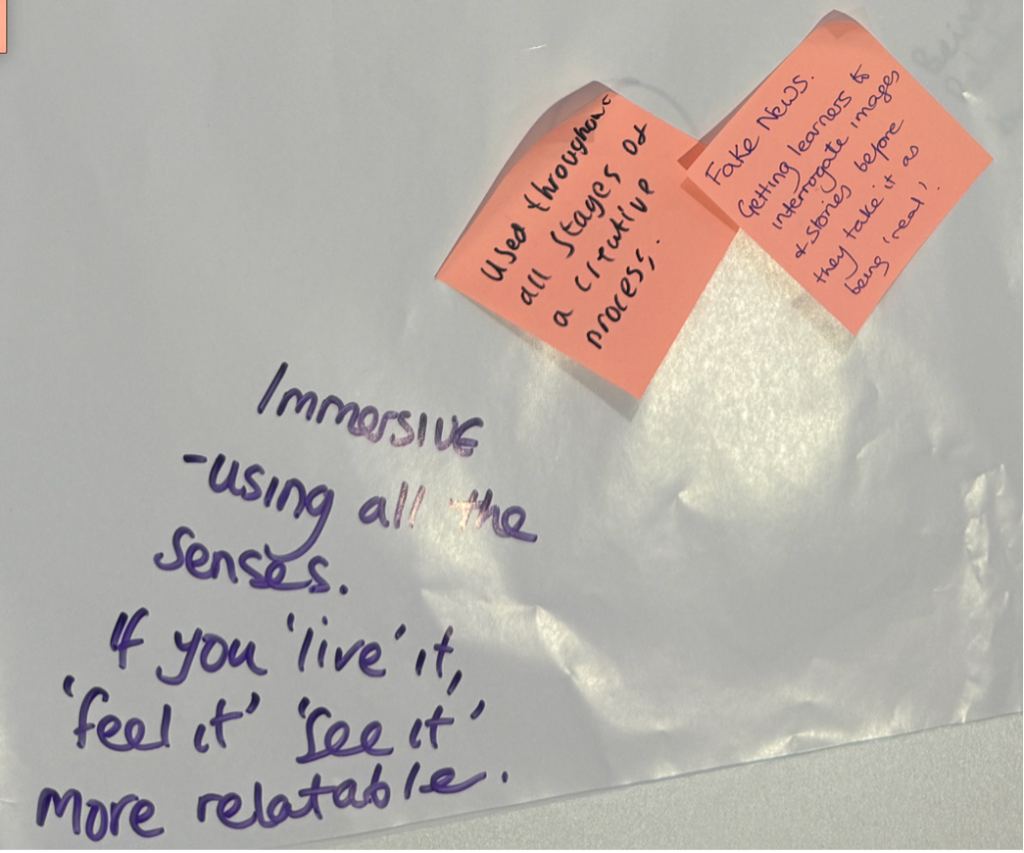
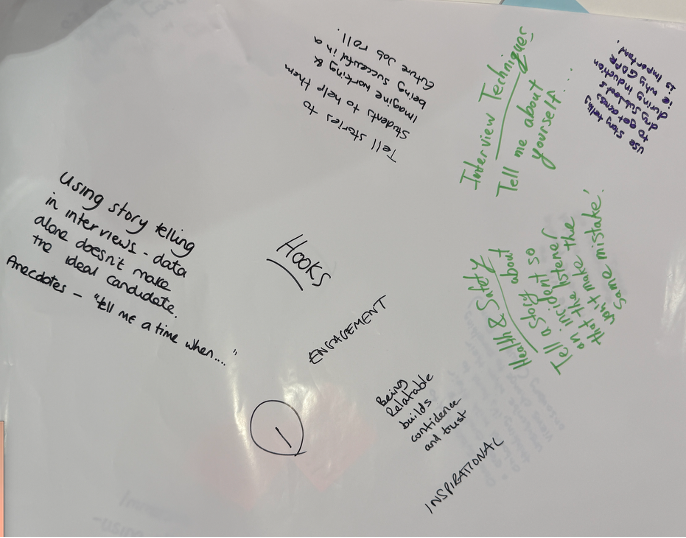
It was clear that the workshop attendees believed there absolutely is a place for storytelling in the workplace. Using stories to influence decision‑making was seen as a valuable skill and something students should adopt as part of their employability toolkit. Interview techniques and application writing were identified as the first storytelling opportunities students may encounter, but there were also conversations about how storytelling can motivate, inform and guide colleagues beyond the interview and in the role.
Introducing storytelling to students from the perspective of employability was seen as both a challenge and an opportunity. The chance to use storytelling to emphasise students’ potential was noted, not only showing how to tell stories but also helping students imagine what they could achieve.
“Tell stories to students to help them imagine working and being successful in a future job role.”
However, there is a need to consider how a story is delivered. Using too many different stories could suggest a lack of reality or authenticity. This was seen as something to be mindful of, both when teaching students and later in the workplace.
“Being relatable builds confidence and trust.”
Many comments highlighted storytelling as an effective way to engage students. Putting learning into a relatable context can be far more effective than more traditional approaches. Storytelling was viewed as a potentially more inclusive way of teaching. For example, when working with data. Taking the information that data provides and telling the story of why that information matters can help people understand and act on it.
With so much use of AI in education and the workplace, being human and creative with storytelling can help ensure that people understand messages more clearly and feel more motivated.
The use of digital tools for storytelling was also recognised as valuable for enhancing stories and emphasising key points. Whether through sound, images or video, digital tools were seen as enablers of more dynamic and effective storytelling. However, this requires skills and time, which could affect motivation for some.
Is there a place for digital storytelling in the workplace? Some felt it depends on the context, but if the goal is to change hearts and minds, making a story more engaging is only beneficial.
“They can generate more interest. Videos and images draw in the viewer as they can be more immersed in the story. It can be very powerful.”
Overall, there was an overwhelming sense of positivity about using storytelling in the context of employability. Many examples were given of how storytelling enhanced communication and learning.
Challenges were also identified, mainly the additional work for educators or students. The value of a story in underpinning a message or learning outcome is not always immediately obvious and may take more time to develop. Regarding employability, some suggested that interviews or applications could explicitly ask for stories from applicants. This gives people the opportunity to share more detail about their skills, experience and suitability for a role.
Thank you to those who attended the workshop and contributed to the conversation. This is a wonderful journey we are on, exploring how storytelling is used, developed and celebrated in HE, FE and beyond. There are always more questions, and more stories about opportunities for ethical and pedagogical uses of storytelling.
Where do you find yourself using storytelling with students or colleagues?
Learn more about the Digital Storytelling Community
The Digital Storytelling community is aiming to explore how digital storytelling can be used across education. It is open to FE and HE staff who are interested in using digital storytelling to support and/or enhance teaching and learning.
Some useful links:
- Podcast – Beyond the Technology: digital storytelling and assessment
- Blog posts – Storytelling on Inspired learning Blog
- Video – Storytelling tips
