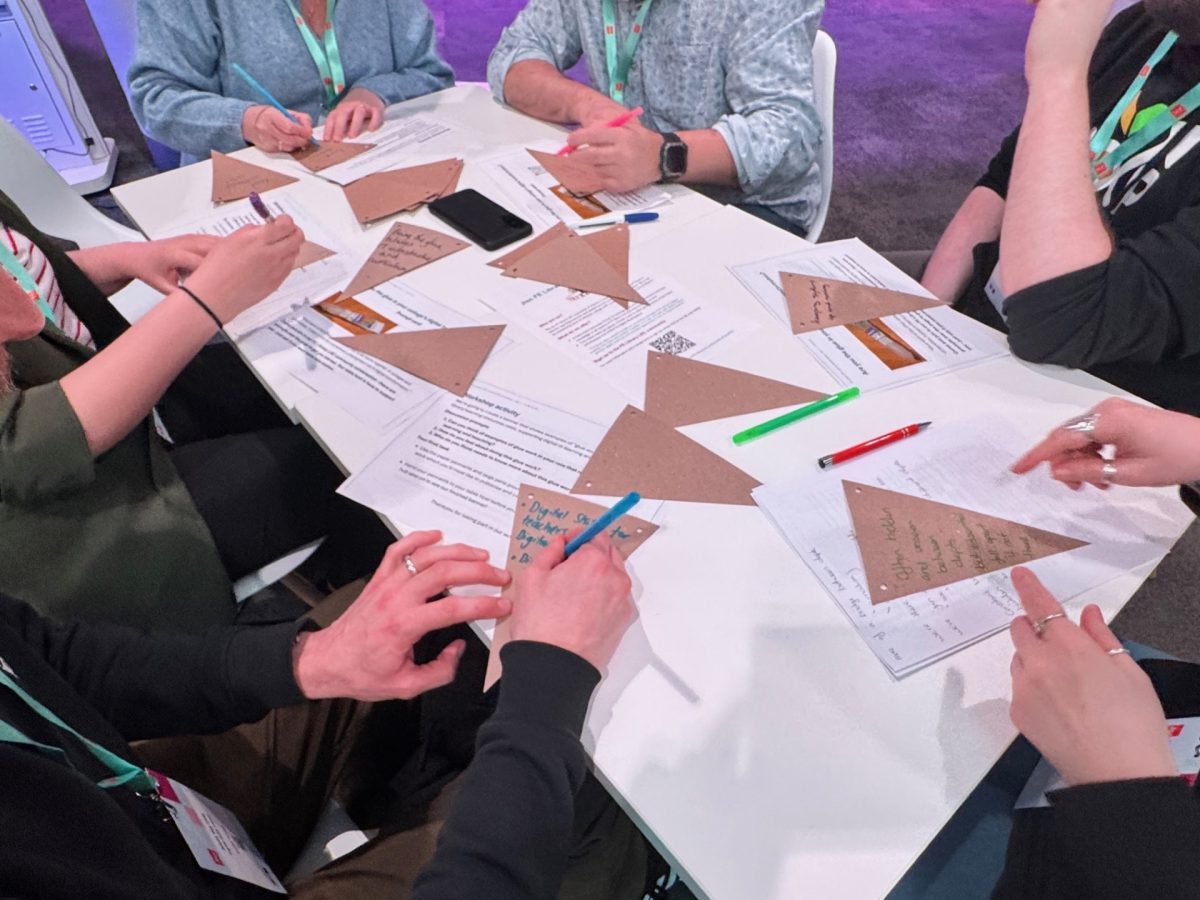
This year’s Digifest the Jisc FE Library LRC community of practice hosted a workshop with the title “Are you the glue in your college’s digital transformation?”. Participants responded with a resounding ‘Yes!’, coming up with a valuable set of insights into the ‘glue work’ that college library and learning resources teams to sustain the college’s digital development, smoothing the path for students and teachers.
What is glue work?
Digital transformation can often feel driven by technological demands but it relies on the work of humans in order to succeed. This is where ‘glue work’ comes in: it’s the often invisible – but nonetheless vital – work that goes on behind the scenes: noticing gaps, making connections and finding solutions.
My colleague Glyn Rogers’ blog post gives a neat definition of glue work:
“Coined by software engineer and author Tanya Reilly in her influential talk Being Glue (2017), the term describes the often unseen work that holds teams together: coordinating, communicating, and problem-solving so others can do their jobs more effectively. As Reilly notes, glue work makes everyone else more effective.”
The more I reflected on the idea of glue work, the more I realised that it covers a fair amount what I see happening in today’s FE library and learning resources services as they adapt continuously to their communities’ needs. In doing this they collaborate and connect with with other roles and teams, notably digital learning teams as well as IT and curriculum.
What did we learn?
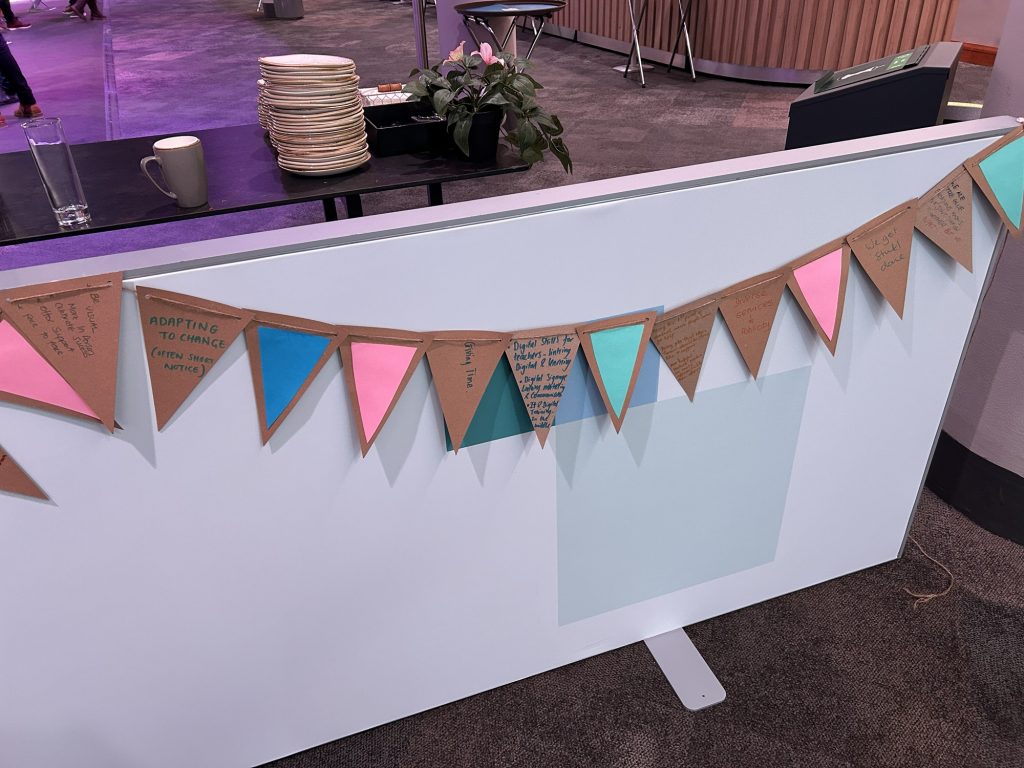
Around 30 participants took part in the workshop, many of them in FE library or learning resources roles. Together they generated around 50 examples of how they contribute to their colleges’ digital transformation which they consider ‘glue work’ – often unseen and therefore easily under-valued. Some also told us about their attitudes to glue work and offered ways in which its value might be made more explicit to senior leaders.
Connecting people, practice and technology
In small groups we began to dig into the ways this glue work materialises in the library space, where college digital systems meet people in their teaching and learning practice.
Common examples included:
- Signposting, problem-solving and interpreting information needs
- Acting as an intermediary between IT, learners and staff
- Communicating hidden student challenges back to teachers
- Providing subject-focussed guides to resources both digital and print
Participants highlighted how this work relies not only on technical knowledge but also on communication and the ability to relate to the needs of the people they support.
“The glue between teachers and digitally literate learners.”
Agile problem-solving
What happens when things don’t go to plan, change suddenly or no-one knows who to ask for a fix? For some participants, the Covid experience was a case in point. Participants told us how FE library and learning resources staff demonstrate their ability to adapt and collaborate to get answers to students’ questions and find practical solutions even when technology doesn’t always work as expected.
“When Covid hit we helped keep everyone connected…and that work continues”
Glue work and digital leadership
It would be easy to view glue work as mundane and routine. But it can also be seen as a quiet act of leadership. While it is carried out in the background, not drawing attention to itself, it makes an important contribution to pioneering and sustaining digital development.
Participants gave examples of areas where glue work is contributing to digital innovation, for example:
- Piloting VR
- Introducing AI literacy
- Experimenting with new tools and platforms as early adopters
As one person noted, staff “in the middle” between IT and curriculum can often be good at spotting new opportunities as they make a point of seeking connections across the organisation (and beyond it, where they are part of wider professional communities like the Jisc FE Library LRC community). Another participant noted how libraries act as the “glue between the old and the new”: familiar yet constantly evolving, they can help to build trust among those who need support and encouragement the most.
“With every new disruption we adapt, learn, share knowledge and help to move in new directions”
The importance of care
Participants talked about the valuable human skills that characterise glue work in college libraries and learning resources teams. For example they mentioned how they:
- Offer space where it is ok to admit not knowing
- Help learners to feel a sense of belonging
- Support teachers to gain confidence
A well-designed library space can offer an open environment for digital experimentation which feels welcoming and safe, getting away from conventional classroom dynamics and professional peer pressure which can feel inhibiting.
“Digital support when students need it – getting on and staying on!”
Attitudes to glue work
Participants were keen to celebrate examples of their glue work.
“I like being the glue – we support and collaborate”
However there was the occasional warning sign that we should not be complacent about all staff experiences of glue work. One person commented somewhat wryly that they felt like “the sticking plaster that fixes everything”.
It was interesting to note one participant preferring an alternative metaphor, seeing the library as a bridge. They also suggested that Quality teams have a role to identify areas where glue work (or bridging activity) is taking place.
Why does glue work go unrecognised?
There are many reasons why some digital support activities – in libraries and elsewhere – can appear invisible, e.g.
- They are not clearly owned by a single entity
- When carried out in reaction to unexpected events it can be hard to quantify
- When it works well it is harder to spot
- Approachable staff may find it hard to say ‘no’ and can become overstretched
- The needs of those with lower levels of digital confidence can be overlooked by staff whose digital capabilities are more advanced
And so essential glue work goes unnoticed…until it stops. That can happen for many reasons such as restructure, redundancy, long term illness, retirement or promotion of key individuals.
Getting glue work to stick
Participants came up with some useful suggestions about how the ‘glue work’ of college libraries and learning resources services in digital transformation could be surfaced more strongly:
- Be visual: this could be about showcasing work in spaces leaders pass through, or using visual methods rather than text only to convey messages
- Celebrate success stories publicly: marketing and comms teams can be a big help here,
- Look for opportunities to make contact in-person alongside digital communications
- Provide proactive support: if interventions are based on evidence of need rather than a ‘shot in the dark’, it is more likely you can track signs of impact for the effort put in
- Skills scans to uncover hidden capabilities of library teams: our Building Digital Capabilities discovery tool helps staff reflect on their own skills
Join the community conversation
The outputs from this Digifest workshop will feed into our future support and our FE Library LRC community activities. If you work in a Jisc member organisation and would like to join, our FE Library LRC community page has further details and a link to sign up.
If you work in a different role, you’ll find a wide range of other communities on the Jisc website.
Useful links
Rogers, G. (2025) Are you the glue holding things together? (blog)
Thomson, C. (2025) Building bridges: working together across IT and teaching departments (blog)
Barnes, C (2025) Community: the glue holding everything together (blog)
Jisc Building digital capabilities discovery tool
Jisc FE Library LRC community – further info and joining instructions
Acknowledgements
Thankyou to members of the Jisc FE Library LRC community leadership team for their valuable input to the design and delivery of the workshop: Jacinta Jolly, Erika Neck and Louise Ord.